Enterprise Incident
Escalation
& Follow-Up Services
RND Softech delivers structured ITIL-aligned escalation protocols, 24/7 NOC incident response, and rigorous follow-up processes that transform server crises into controlled resolutions - protecting uptime, SLAs, and business continuity around the clock.
Core Services
Complete Escalation & Follow-Up Services
From first alert to root cause elimination, we manage every phase of the incident lifecycle with ITIL-aligned processes, dedicated engineers, and measurable SLAs.
24/7 NOC Monitoring & Alerting
Continuous server and infrastructure monitoring by dedicated NOC engineers. Intelligent threshold-based alerting, anomaly detection, and automated first-response scripts catch and act on issues before they escalate into outages.
- Real-time server health dashboards with anomaly detection
- Multi-layer alerting - CPU, memory, disk, network, services
- SIEM-integrated correlation for security-related incidents
Tiered Escalation Protocols
ITIL-aligned P1-P4 priority classification routes every incident to the correct engineering team with defined SLAs, automated notifications, and management visibility. No incident is ever stuck - the system enforces automatic progression at each tier.
- P1 Critical - 15-min response, immediate war-room activation
- P2 High - 1-hour response, L2/L3 engineer dispatched
- Full audit trail - every escalation step timestamped and logged
Rapid Incident Resolution
Pre-built runbooks for 200+ failure scenarios, automated L1 recovery scripts, and live diagnostic tooling enable our engineers to resolve most critical incidents within SLA - minimising MTTR and business revenue impact.
- Pre-built runbooks for 200+ common server failure scenarios
- War-room protocols for P1 incidents with client bridge call
- Mean Time to Resolve tracked and reported monthly
Root Cause Analysis
Structured RCA methodology using 5-Whys, Fishbone and fault tree analysis identifies the true underlying cause of every major incident. Documented corrective and preventive actions are tracked to completion to eliminate recurrence permanently.
- Formal RCA report delivered within 48 hours for P1/P2
- Corrective and preventive actions with ownership assigned
- Knowledge base updated after every major incident
Incident Documentation & KB
Every resolved incident contributes to a growing searchable knowledge base. Detailed tickets, RCA reports, and resolution playbooks reduce recurrence rate, cut future resolution time, and provide audit-ready compliance evidence.
- Chronological timeline of all escalation and resolution steps
- Audit-ready documentation for ISO 20000, ITIL and SOC 2
- Searchable runbook library updated continuously
Follow-Up & Executive Reporting
Post-resolution stability verification, weekly trend analysis, and monthly executive reporting keep your leadership informed. KPI dashboards cover SLA adherence, MTTR, incident volume, and improvement recommendations with full audit support.
- 24-hour post-resolution stability monitoring confirmation
- Monthly executive summary with SLA scores and MTTR metrics
- Quarterly infrastructure health review and roadmap updates
Our Process
The Incident Lifecycle Process
Every incident follows a structured 6-stage lifecycle - from first detection through to root cause elimination and continuous improvement, with full documentation at every step.
Detection & Alert Triage
Automated monitoring detects anomalies and triggers alerts. NOC engineers immediately triage each alert - validating severity, ruling out false positives, and classifying the incident as P1 through P4 to drive the correct escalation path.
Ticket Creation & Assignment
A formal incident ticket is opened in your ITSM platform with full context captured. The incident is assigned to the appropriate L1/L2/L3 engineer based on skill set and priority, with automated SLA clock started and stakeholders notified.
Investigation & Diagnosis
Engineers use live diagnostic tooling - log analysis, memory dumps, trace routes, and infrastructure health scans - to isolate the root cause. Pre-built runbooks guide L1 resolution; complex issues are escalated immediately to L2/L3 specialists.
Resolution & Recovery
The approved fix is applied following change control procedures. For P1 incidents, a client bridge call runs throughout resolution. Post-fix validation confirms service restoration, and the SLA clock is stopped with time-to-resolution recorded.
Post-Incident Review & RCA
A 24-hour stability monitoring period confirms the resolution held. For P1/P2 incidents, a formal Root Cause Analysis report is produced within 48 hours - detailing what happened, why, and the corrective and preventive actions being implemented.
Continuous Improvement Loop
Incident trend data feeds monthly executive reports. Recurring failure patterns trigger proactive infrastructure improvements before the next occurrence. Quarterly health reviews translate operational intelligence into infrastructure roadmap enhancements.
Why RND Softech
Benefits of Managed Escalation Services
Structured escalation and disciplined follow-up deliver measurable improvements to uptime, SLA compliance, security response, and long-term infrastructure resilience.
Minimised Downtime
Proactive monitoring and fast escalation paths dramatically reduce Mean Time to Detect and Mean Time to Resolve - protecting SLAs and revenue-generating systems from extended outages.
Enhanced Security Response
Security incidents receive immediate P1 classification with SIEM-integrated alerting, isolating threats before they propagate and triggering forensic investigation protocols automatically.
Reduced Incident Cost
Preventing escalation to critical severity and eliminating repeat incidents through RCA-driven corrections reduces the average cost per incident by up to 60% over 12 months of managed service.
Guaranteed SLA Compliance
Automated SLA tracking with escalation triggers ensures contractual obligations are always met. Real-time dashboards give both your team and your clients full visibility into compliance status.
Internal Team Empowerment
Our knowledge base and post-incident training materials upskill your internal IT team, transferring expertise and gradually reducing dependency on external support over time.
Continuous Improvement
Every incident drives improvement. Trend data, recurring failure patterns, and quarterly infrastructure reviews feed into a cycle that measurably strengthens your environment month over month.
Never Let an Incident Go Unresolved Again
From the first alert to root cause elimination, RND Softech keeps your servers protected, your SLAs intact, and your business running without disruption - 24 hours a day, 365 days a year.
FAQ
Frequently Asked Questions
What is managed escalation and follow-up in server management?
Managed escalation and follow-up is a structured ITIL-aligned service governing how server incidents are detected, classified by severity, routed to the correct engineering team, and resolved within defined SLAs. The follow-up component verifies stability post-resolution, documents root causes, and implements corrective actions to prevent recurrence - converting reactive firefighting into a continuous improvement cycle.
What are your P1 incident response and resolution SLAs?
For P1 Critical incidents causing complete service outage or severe business impact, our SLA is a 15-minute initial response with a 4-hour resolution target. P2 High incidents receive a 1-hour response with 8-hour resolution. P3 Medium is acknowledged within 4 hours and resolved in the next maintenance window. All SLAs are contractually defined and tracked in real time with automatic management escalation if thresholds are approached.
How does tiered escalation work in practice?
When an alert fires, our NOC triage engineer classifies the incident and opens a ticket. L1 engineers attempt first-response resolution using pre-built runbooks. If unresolved within a defined window, the ticket automatically escalates to L2 specialists, then L3 senior engineers, and finally to management - each step sending automated notifications to both our team and your designated contacts. No incident can stall at a single tier.
What happens after an incident is resolved?
Resolution is not the end of the process. We perform a 24-hour post-resolution stability monitoring period to confirm the fix held. For P1/P2 incidents, a formal Root Cause Analysis report is produced within 48 hours - detailing what happened, why it happened, the resolution taken, and the corrective and preventive actions being implemented. This report is shared with your team and stored in the knowledge base.
How do you prevent the same incident from recurring?
Root cause elimination is at the heart of our follow-up process. After RCA we implement Corrective Actions to fix what broke and Preventive Actions to close the systemic gap that allowed the incident. These are tracked through to completion with ownership assigned. Recurring incident patterns are flagged in monthly trend reports, triggering infrastructure health reviews and proactive remediation before the next occurrence.
What reporting do clients receive?
Clients receive real-time access to a live incident dashboard, weekly trend summaries, and a comprehensive monthly executive report. The monthly report covers total incident count by priority, SLA adherence rates, MTTR and MTTD metrics, top recurring issues, corrective actions in progress, and infrastructure recommendations. For ISO 20000 and SOC 2 compliance, we generate audit-ready evidence packs on request.
Which ITSM tools do you integrate with?
We integrate with all major ITSM platforms including ServiceNow, Jira Service Management, Freshservice, Zendesk, PagerDuty, OpsGenie, and BMC Remedy. If your business uses a custom ticketing system, we can integrate via API or email-based ticket ingestion - ensuring all incident records are reflected in your system of record for audit and compliance purposes.
Can your escalation service cover hybrid and multi-cloud environments?
Yes - our monitoring and escalation framework is platform-agnostic. We support on-premises, co-location, AWS, Azure, GCP, and private cloud environments from a single NOC. Unified alerting aggregates signals from all environments and our escalation SLAs apply uniformly regardless of where the affected workload runs. For hybrid environments we also handle cross-platform dependency mapping as part of every incident response.
Our Certifications
RND Softech maintains the highest standards of security, quality, and compliance with globally recognized certifications across all operations.
Have a Project in Mind? Let's Talk
Use our contact form for all information requests or contact us directly. All information is treated with complete confidentiality.

.webp)
Talk to Our Experts
Schedule your free consultation
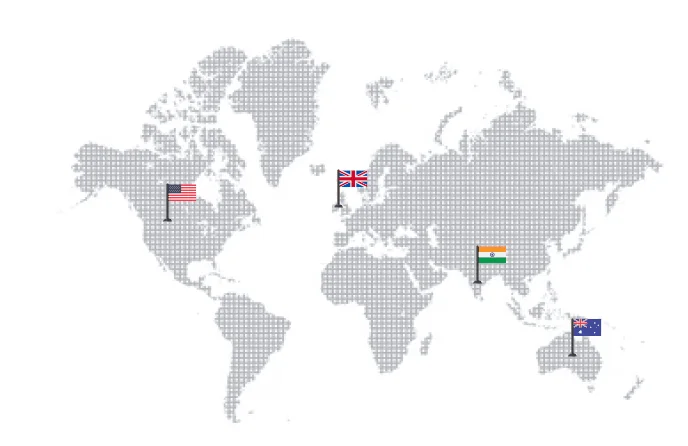
More Than 250+ Clients Worldwide Work With Us
With a presence across 4 continents, we deliver exceptional back-office staffing solutions to businesses in USA, UK, Canada, and Australia.